
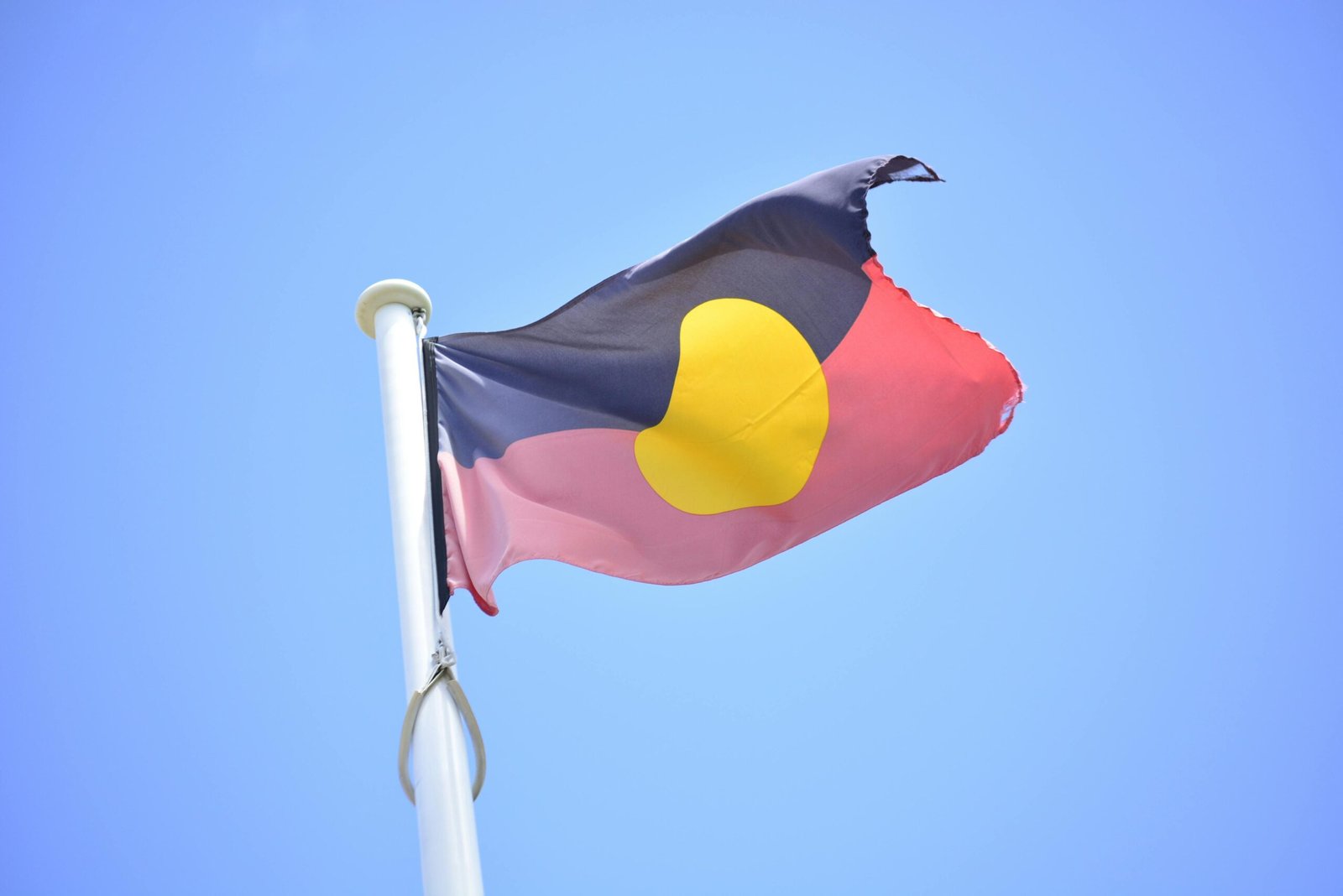
On the 31st of August 2025 NITV’s Bronte Charles and Yasmine Alwakal reported a ‘brutal, terrifying and traumatising’ Neo Nazi attack at Melbourne’s Camp Sovereignty. The peaceful protest with a smoking ceremony on sacred land turned into a violent, hate fuelled event with ‘Aboriginal flags being stomped in mud… brutal beatings from men armed with sticks and rods’, said Indigenous Australians Minister Malarndirri McCarthy.
Welcome or Acknowledgement to Country ceremonies have faced increasing criticism. In 2025 alone, Neo Nazis booed an ANZAC Day Welcome to Country speech, Pauline Hanson turned her back during Acknowledgements of Country, and Clive Palmer disseminated slogans such as ‘we don’t need to be welcomed to our own country’.
The 2025 Ipsos Indigenous Issues Report shows 36% of Australians find Welcome to Country ceremonies are considered ‘unnecessary’ and a ‘waste of time’.
In light of recent displays of prejudice and abuse against First Nations peoples, we must dive into the cultural meaning behind these ceremonies to recognise the need for further unity, knowledge and change.
Defining Welcome to Country
A Welcome to Country is ‘a ceremony that takes place at the beginning of an event… done by the traditional custodians of Country to formally welcome people onto their land’, as reported by Jessica Bahr and Mikele Syron from the SBS.
Reconciliation Australia explains that welcoming visitors to Country is embedded in Aboriginal and Torres Strait Islander cultures. ‘Boundaries were clear and crossing into another group’s Country required permission to enter. When permission was granted the hosting group would welcome the visitors offering them safe passage…’
These spiritual protections were first introduced to Australia in 1976, but origins go back thousands of years to pre-colonial times. The practice has been adapted in contemporary Australian society through smoking ceremonies and verbal welcomes. The ceremonies’ meaning have remained as a welcoming gesture to visitors and signifies respect for Country.
Reconciliation Australia defines Acknowledgements to Country as ‘an opportunity for anyone to show respect for Traditional Owners and the continuing connection of Aboriginal and Torres Strait Islander peoples to Country… (This) can be offered by any person and like a Welcome to Country, is given at the beginning of a meeting, speech or event’.
Bundjalung lawyer and advocate Vanessa Turnbull-Roberts, highlights this in SBS article stating: ‘Welcome to Countries are an opportunity to come together and seek consent on the land that we’re walking on and be welcomed into a place of community and connection’.
Adrian Atkins is Western Sydney University’s Badanami Student Success Officer and Deputy Chair member of the Bulagaranda Aboriginal Area Board of Management and a proud Anaiwan man.
In an exclusive interview, Atkins describes what Country means to him:
‘The difference between standing in Sydney and hearing an acknowledgement, versus standing being immersed in Country and listening to your Elders give a Welcome to Country, is like night and day…’
‘I have seen the traditional people of those places that were there before it was European settlement, a town, a city, a metropole… We’re talking about Aboriginal people being refugees in their own country, living on other people’s country… I am the 3rd generation of my family that has lived in Sydney, but my cultural identity lies back on Country and is informed by my Elders and my relatives’.
Atkins emphasises connections to people and place is more than recognition. It is a space of learning about oneself, Indigenous culture and Country.
‘I have met people from other Aboriginal cultures, and they have shared knowledge with me that has shaped my understanding of what it means to be Aboriginal… I’ve had elders that have shared that your genealogy just tells you who you’re connected to but it’s your Aboriginality that is the work in progress and is a lifelong journey within yourself and within Country…’
Harmful Rhetorics About Welcome to Country
Despite the cultural importance of Welcome to Country ceremonies, concerns about Indigenous sovereignty is often unduly highlighted in Australian politics.
In 2024, sensationalised stories condemned Welcome to and Acknowledgement of Country ceremonies, especially in sporting events. 2025 federal election campaigns saw Peter Dutton express such ceremonies are ‘overdone’ and ‘divide the country’.
This has ignited similar sentiments from independent political parties. On the 23rd of July 2025, One Nation senators turned their backs to a Parliamentary Acknowledgement of Country. According to an Instagram post by the party, ‘One Nation is saying what we’re all thinking; Welcome to Country has worn out its welcome. We are all sick of being welcomed to our own country’.
Dr. Donna James was formerly the Course Coordinator of HUMN3118 ‘Indigenous Cultures: A Global Perspective’ and is currently a Lecturer in Heritage and Tourism Studies and the Academic Program Advisor for Tourism, Hospitality, and Events programs. She often teaches the cultural and social significance of Welcome to and Acknowledgement of Country ceremonies in her classes.
‘The oldest living culture in the world extends their arm and says we want to welcome you to our culture and people turn their backs’, she stated. ‘I think there is a lot of misunderstanding about what the practice means… but I don’t think it’s fair to say there’s a lack of information. The information is out there, and people actively choose not to engage with it and buy into media headlines and culture wars. I think it’s racist, offensive and disgusting’.
Atkins highlights the consequences of these views when not confronted:
‘The political system in this country does not want to acknowledge the people that have prospered from the colonial imperative, seizure and exploitation in the pursuit of profit. The politicians in this country — they represent our society, good, bad and everything in between. And part of that ‘Great Australian Silence’ is that there are people for generations that have never been held accountable’.
‘It’s all about accountability’, Atkins continues. ‘Rather than building consensus and connection, (our politicians) they would rather divide and celebrate being impartial. I think as a sophisticated society with these complex issues, is that really good enough?’
Read Part 2 here — Indigenous Sovereignty: Right-Wing Extremism Rises — COMING SOON