
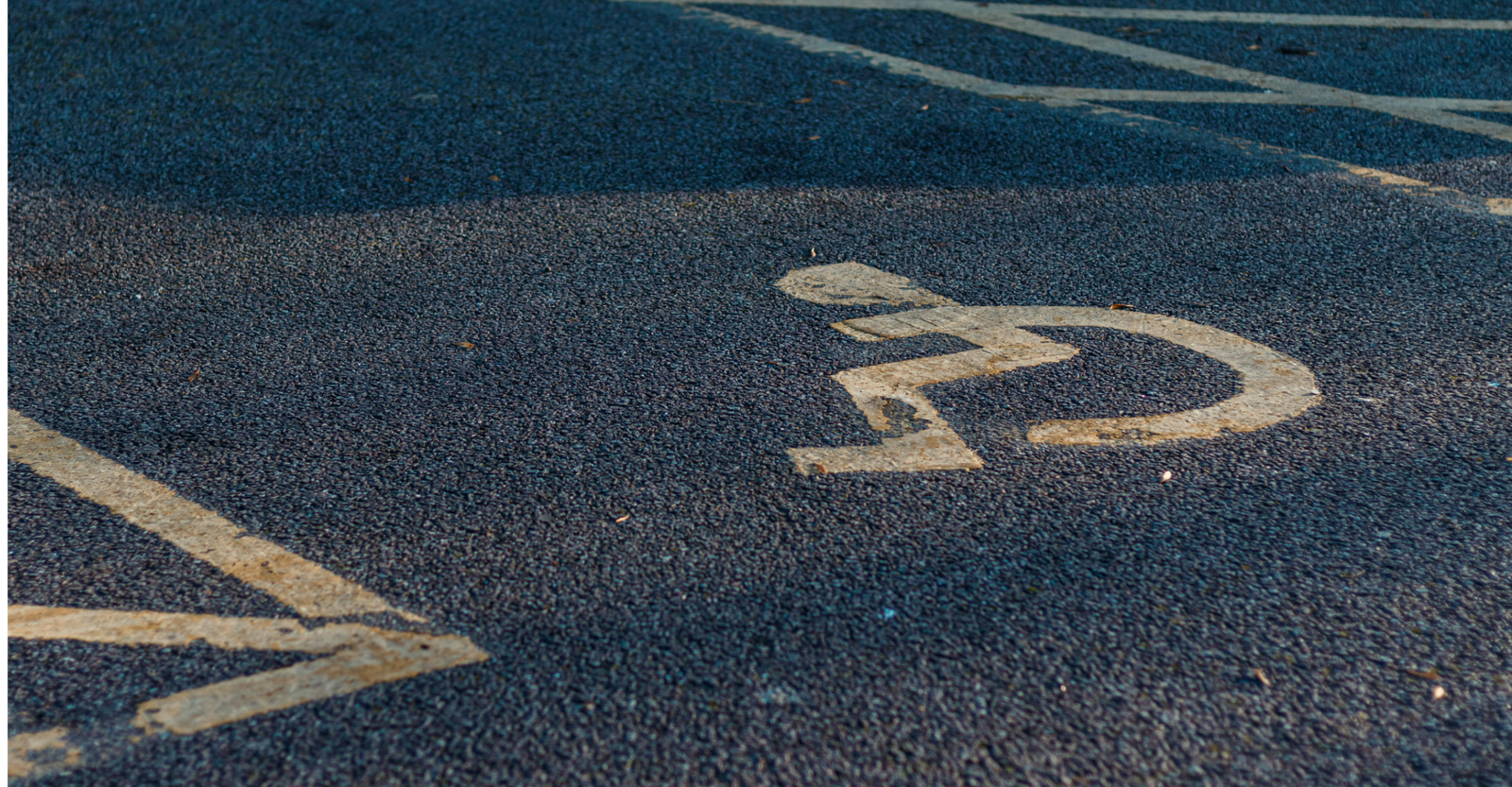
Arriving after 9 a.m. at Parramatta South can be stressful for many students, but for those who rely on disabled parking, it’s often a race against the clock.
According to the Western Sydney University parking team, there are 24 mobility parking bays across Parramatta South campus, located near the library, the science buildings, and the security offices. For a university community of more than 20,000 students on the Parramatta campuses and thousands of staff, that limited number stands out.
While the number of spaces has been confirmed, several community members say that demand continues to exceed supply. It’s often possible to find a space early in the morning, but after peak hour, most bays are full. Observations across different parking zones show that some reserved bays that are marked red, green, or white, remain underused, while mobility parking reaches capacity quickly. A simple review of usage on peak and non-peak days could help planners re-allocate a few reserved bays to better meet accessibility needs.
Adele Gutzinger, a student who regularly uses the parking, described the challenge: “If it’s before peak hour, I can find a spot. Otherwise, it’s very difficult, and the spots aren’t always used by people who actually have disability parking, which is frustrating.” She added that while the signage is clear, “there just needs to be more available disability parking.”
Accessibility also varies depending on the location. Adele pointed out that “the spaces near the library are not as accessible, but the ones near the science building are.” Though she finds the campus manageable overall, she noted that “there are quite a few areas of uneven paths or stairs only, especially around Oliver Brown.”
Holy Corpe, another student, reflected on how traffic and space planning intersect: “The reason I don’t drive to campus is the traffic during peak periods. But for people who need accessible parking, they have no choice but to deal with that traffic and find a spot closer to their destination. I also wondered if the new EV charging stations near the buildings reduce the number of accessible bays, since they take up some of the most convenient spaces.”
For others, visibility isn’t the problem; it’s capacity. “The signage is usually clear for the disabled spots. They are also accessible, I believe,” said student Razia Saleh. “Although I think that’s relative—maybe for someone actually trying to access it, it might be different. I’m not sure if they ever get so full during the day that it becomes a challenge.”
Across the campus, most mobility bays are well-marked, with ramps and safe surfaces, but a few could benefit from slightly wider spacing. Early planning for accessibility, such as during the Parramatta light-rail construction, did not always account for wheelchair access from the start, which later required redesigns.
Recent upgrades, such as the addition of wheelchair access to Parramatta’s light-rail station, show progress, but also reflect how improvements often come after gaps are identified. As Adele observed, “Not much has changed for years regarding parking.” She suggested that better enforcement could help: “Only people with disability parking permits should be parking in those spots.”
While parking may seem like a small detail, it forms part of the larger picture of inclusion and equity at WSU. Student and staff feedback remains vital to shaping future improvements and ensuring that every campus is genuinely accessible for everyone.